
Posts Tagged ‘new animal’
The Trouble With Table Scraps
 If the holidays are at your place like it is at our place, it is family, food and football—not necessarily in any order. Unfortunately many pet owners think that holiday time means giving their pets a taste of the tender morsels that they partake in. Before you give table scraps – STOP and think a minute. These high-fat type of foods or foods that your pet is not accustom to can lead to disaster if given to our pets. Just a small amount can lead to pancreatitis in our pets, which can lead to terrible consequences.
If your pet develops pancreatitis, the treatment focuses on supportive care, such as controlling nausea and vomiting, preventing further dehydration or imbalances in the blood and feeding a low-fat nutritious diet. Serious cases may mean hospitalizing your pet for a few days or longer. Unfortunately, many other diseases have these clinical signs and it makes it a challenge determining if your pet has pancreatitis.
Early diagnosis and treatment is the key to preventing other complications such as dehydration and other systemic diseases.
As your pet ages, he can develop intolerances to certain foods so it may be best to just feed high quality pet foods with little variance and only allow healthy pet treats in moderation.
Most owners know that a only a good quality diet is necessary for their pet, however sometimes good intention visiting guests can complicate things by letting them finish their plate or giving them all of the trimmings off the turkey because they couldn’t resist.
This kind gesture could lead to the previous mentioned consequences.
To avoid pancreatitis a pet owner may take precautions to prevent it. This may include:
- Ask guests to not feed your pet table scraps
- Have healthy treats present if your guests can’t resist
- Keep pets out of the garbage
- Place your pet in a quiet room during mealtime or feed it prior to you and your guests eating
Holidays are all about celebrating and pets are a big part of our family. Kind gestures like feeding table scraps can put a damper on the celebrating if it involves an emergency trip to your veterinarian. So if you set ground rules and make your guests aware of the restrictions for your pets, we can have a safe and happy holiday season.
Olsen Veterinary Clinic is committed to the health and happiness of your pet. For questions, or to schedule an appointment, contact us here.
Everything You Ever Wanted To Know About Pet Vaccines
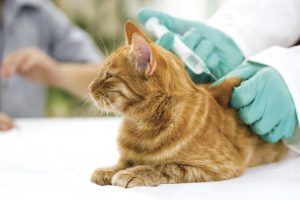 Pet vaccines are important, and they have a long history. Probably the most important technological gains were discovered in the 1790’s by Dr. Edward Jenner. He discovered the first vaccination by giving people a preparation of material from cowpox, which was a common animal disease in cattle. The people that were injected with or “vaccinated” with the material did not get sick and remained healthy when they were exposed to the deadly smallpox virus. Over 100 years later, a French scientist by the name of Louis Pastuer, found that they could protect people and animals from disease by injecting altered forms of microorganisms.
The process of how a vaccine works is a complex reaction that involves many chemical and cellular reactions within and between the immune system cells of the body. Basically the role of the vaccine is to expose the immune system of the pet to viral and bacterial antigens that are contained in the vaccine. In the future, when the pet is exposed to that related organism, the body will recognize it and then activate the immune system to prevent the disease from producing or reducing the signs of clinical disease.
Vaccines can be administered by subcutaneous or intramuscular injections, intranasal or orally. The vaccines that are injected or given orally tend to produce a more systemic or whole body response, whereas the intranasal provides a more local response. Intranasal vaccines can be advantageous to provide a quicker response and prevent or kill the new virus before it can get any further in the body. Local nasal vaccines would not be helpful for a virus that has been ingested and causes intestinal disease such as parvovirus in dogs. For that we would want a vaccine that would produce a more systemic response.
The vaccines that we use in veterinary medicine are most generally either a killed or a modified live (attenuated) vaccine. There are multiple indications for both, but generally speaking the killed vaccines are safer and unlikely to cause disease in the immunocompromised pet. Whereas, the live vaccines provide a more amplified response that leads to a better, longer lasting immune protection. Several of the vaccines that we use have many different viruses in one injection. This allows to vaccinate for several of the organisms in one injection.
To confuse you even more, pets get some protection through the placenta when the puppies and kittens are in the mother’s uterus and when they get colostrum which is the first milk that they drink. This protection will decrease over time and usually will be low enough by 12 weeks of age where vaccinations will start reacting. There is no way to measure quick, easy and inexpensive way to measure the immunity gained here, so we generally recommend starting vaccines at 6 to 8 weeks of age and then booster them every 2 to 4 weeks until they are 16 weeks of age. Generally, it is not the number of vaccinations that they get, but when they get them at their chronological age.
A vaccine helps prime an animal against a specific disease. It does this by stimulating the immune system with a nonpathogenic virus or bacteria. If the animal responds adequately, it will develop cells that will help it to quickly and efficiently fight off the pathogenic form of the agent if it is encountered later. Here at Olsen Veterinary Clinic, we have tailored our vaccination programs to meet the needs of your pet. If you have any questions please feel free to contact us here, or call our office at 618-656-5868.
Caring For A Pet With Cancer
 As pets get older, owners tend to know when our pets are not feeling well or when a lump suddenly “pops” up on our pet. After visiting your local veterinarian, he may give you the words that you do not want to hear—it may be cancer. While the diagnosis can be devastating and painful to hear, it is important to remember there are many different forms of cancer and not all are viewed as terminal.
As with any illness or sickness, it is best to detect cancer at its earliest by bringing your pet in for regular veterinary check ups. Between examinations, it is best to monitor your pet for signs of cancer and schedule an appointment if any clinical signs appear. These may include:
- Abnormal bumps, lumps and swelling on the body
- Sores that will not heal
- Unexplained weight loss or appetite changes
- Bleeding from any body opening
- Unpleasant odor
- Difficulty urinating or defecating
- Persistent lameness
- Drooling or any sign of mouth discomfort
If you suspect that your pet has cancer, it is very important to have as much accurate information as possible for your veterinarian when treating your pet. It is essential to have an accurate diagnosis and your pet’s cancer correctly staged. This will help your veterinarian determine how advanced the cancer is and what possible success rates are for various treatments. Your veterinarian may recommend diagnostic procedures like laboratory tests, biopsies, x-rays, ultrasound or even surgical exploratories.
If perhaps we have a diagnosis of cancer, the goal is to provide your pet with the highest quality of life as long as possible. Dogs and cats tend to tolerate chemotherapy and radiation very well. When side effects do occur, your veterinarian can prescribe anti-nausea and pain medication, as well as nutritional support to keep your pet comfortable during treatment.
With some cases, we may come across cases where the cancer is advanced and your veterinarian may recommend palliative care only. This means that your pet’s veterinary team will keep your pet as comfortable as long as possible and not pursue more aggressive treatments. The primary goal is to maintain the best quality of life possible for your pet.
When dealing with cancer, it is important to watch your pet closely for signs of discomfort and pain and keep your veterinarian informed. Keep all follow up appointments scheduled and stay in contact with your veterinarian. We are here to help. It is also important to spend as much time as possible with your pet and provide a quiet, comfortable place to rest and sleep. Providing nutritional support and fresh water are also important. You may need to make access to an area for your pet to urinate and defecate because of the cancer treatments. Above all, enjoy the time that you have left with your pet.
During the course of treatment, your pet may start having more “bad” days than “good” days. When you feel that you have done all that you can do for your pet, it may be time to consider euthanasia. It is not a time to feel guilty about any decisions you make. This is a difficult decision as most owners weigh not seeing a pet suffer against a desire to not deprive the pet any more “good” days. When this time comes, be sure to communicate with your veterinarian. Communicate your pet’s medical status and learn what to expect in the days and weeks ahead. Talk to your veterinarian and find out what options are available for your beloved pet in case euthanasia is needed to alleviate the discomfort of your pet.
Don’t live under a cloud of doom and fear. It is best to live life to its fullest. We all live in the “Circle of Life”. Don’t waste the “life” part. Remember there is always hope and it is best to take one day at a time and appreciate the life that is left in your pet.
For more information, or questions and concerns, don’t hesitate to contact our office.
Questions For New Pet Owners To Ask Their Vet
 Congratulations! Welcome to the world of pet ownership. This might have happened to you over the holiday season. As responsible pet owners, it is important to keep your pet healthy and a good way to do that is to develop a relationship with a veterinarian. As with a person choosing their own physician, it is important to find a veterinarian that meets their needs, as well as getting the right sense of education, experience and personality.
Before you meet with a potential veterinarian, learn as much about the practice as you can by reading the clinic’s website, search the vet’s Facebook or Twitter page and see what their clients are saying. Maybe look for testimonials and note any red flags that may present. It may be helpful to schedule a meeting with the veterinarian-not for an exam, but to see what chemistry the veterinarian has with your pet. And then take the information gathered and decide if maybe they might be a good fit for you.
A pet owner must consider the health of their pet and tailor questions to address any needs or conditions that he or she has, especially if your pet may need specialized care in the future. The owner needs to consider the veterinary clinic’s policies and make sure that they meet the owner’s criteria. As in almost every situation, communication is important. It is important that you can get in touch with your veterinarian when you need to. Make sure the practice and your specific vet have open lines of communication, and know all the channels you can use to contact them.
With that in mind, here are some possible questions that you may want to ask a new veterinarian.
- How many veterinarians are in the practice? Will you see the same veterinarian every time or do the doctors switch or rotate without notice?
- How far in advance does the practice typically schedule appointments?
- If you need same-day care, will the practice see you or refer you to an emergency veterinarian?
- What are the qualifications of the technical staff? If your pet needs a simple procedure can you see a tech or do you need an appointment with the main vet?
- If your pet has a specific disease or ailment, does the veterinarian have experience treating that condition?
- Are the veterinarians open to alternative treatments like chiropractic care or acupuncture?
- Does the practice offer emergency or after-hours care? If not, where would the practice send you?
- In case referral work is needed, where does the veterinarian send them?
- What is the best way to contact the veterinarian during the business day and after hours?
- Is the veterinarian willing to answer questions via email?
There are many good veterinarians in practice out there, so finding an appropriate one may take some time and extra research. But in the long run, the task may be less challenging and lead to fewer problems by taking time to find one that meets your criteria.
October is National Pet Adoption Month
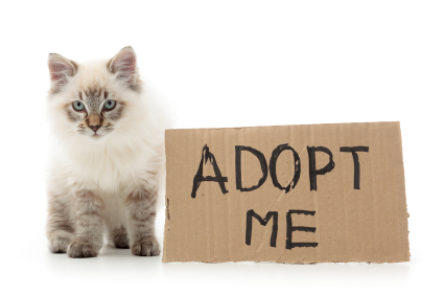 October is National Pet Adoption Month and many people constantly are adopting pets from rescue organizations. Peoples lives are enriched in ways that they have never dreamed possible. Bringing home a new pet is such an exciting and fulfilling experience, but it can be a bit daunting as well, especially if you have never shared your home with a furry companion. Here are some tips to get your relationship off on the right foot.
Be prepared Before you bring your pet home, determine where your pet will be spending most of its time. Because it will be under a lot of stress with the change of environment, it may forget any housebreaking it has learned. An area with tiled, pergo, or linoleum floors may be best because it is easiest to clean up. You will also need to dog-proof the area where your pet will spend most of its time. This may mean taping loose electrical cords to baseboards, storing chemicals on high shelves, removing plants, rugs and breakables. The more prepared that you are, the smoother your new family member’s transition will be.
Shop for the basics You will need a leash, collar, food and water dishes and of course food. It is best to know what your new adoptee is eating as an abrupt diet change can cause diarrhea and other problems. If you change its diet, do it as a gradual change like maybe over 10 to 14 days. One other thing to buy is a medal id tag. It does not replace microchipping, but it does help some. If you are planning on crate training your pet, it is best to wait and take your pet with you to purchase it. This way you will get the proper size.
Consistency Make sure all family members are on the same page. Ground rules need to be set and the family members need to agree to follow and enforce them. For instance, if you don’t want your new pup on the couch, all the training in the world won’t help if your child lets it sit there with you when you are not home. Also, caring for your pet is a family effort and endeavor, so it is important that everyone understands their particular roles and responsibilities.
Adjustment Over the first few days to few weeks, your new pet will be undergoing an adjustment period. These surrounding are new to him, so you may notice some anxiety issues that may include appetite loss or suppressed bowel habits. It may even hide under or behind furniture or stay in one room. Don’t be alarmed-this is absolutely normal behavior. Give the pet time to acclimate to your home and family. By showing patience, you will help it through a tough, scary time and it will show the pet how wonderful his new home really is.
Set Schedule It is best to set a schedule for feeding, toileting and play/exercise. From Day One, your dog will need family time and brief periods of solitary confinement. Don’t give in and comfort it when it whines when left alone. Instead, give it attention for good behavior, such as chewing on a toy or resting quietly. By sticking with a schedule that you created, your pet will be bonded with you in no time and the pet will be showing its true personality.
Veterinary Care Schedule a first visit to your pet’s veterinarian during the first week. Bring any and all medical and vaccination records that were supplied by the shelter or rescue from which you adopted your dog. This first visit os a great time to get clues about your pet’s personality and past history, so don’t be afraid to ask lots of questions. Also, if your pet is not microchipped, this is a good time to do it because true love is hard to replace.
Congratulations! If you follow these tips, you’ll be on your way to having a well-adjusted family member. Make sure to contact us if you have any questions!