
Posts Tagged ‘pets’
FAQ’s About Pet Vaccinations
 Vaccinations are part of a basic pet wellness program that the Olsen Veterinary Clinic administers in Glen Carbon and the surrounding area. If you are not familiar with veterinary concerns or have never owned a pet up to this point, it is understandable that you might not know exactly what the pet vaccinations can do to safeguard your pet’s health. As August has been designated National Immunization Awareness Month, here are some frequently asked questions we get from pet owners regarding dog and cat vaccinations.
What is a vaccination?
A vaccination is an injection that is given under the skin to stimulate the production of antibodies by the pet’s immune system against specific infections. They are needed once the antibodies transferred from the mothers to the newborn puppies and kittens wears off, which usually occurs within weeks of birth.
Are pet vaccinations harmful to my pet?
A vast majority of the vaccinations are actually quite safe and cause no illness to the pet. However, some pets may have mild side effects that can include fever, swelling, redness and digestive upset. If this has previously occurred it may be important to let your veterinarian know so that steps can be made to prevent or minimize the side effects.
What are “core vaccinations”?
Core vaccinations are vaccines that protect your pet against a handful of common and dangerous illnesses. Rabies is among the most important, because it is fatal to pets and can be spread easily to humans and other mammals. Because of this, it is important to vaccinate both cats and dogs against rabies. Other vaccinations that are considered core vaccines for your dog include canine hepatitis, parvovirus and canine distemper. While in cats, the core vaccinations include feline calicivirus, feline distemper, and Feline Herpes Virus along with the rabies vaccine.
What other vaccinations should I consider?
There are other diseases that can affect your pet. Here we tailor the vaccinations depending on the probable risks that your pet might incur. If your dog is quite mobile, groomed or boarded, or is in contact with other dogs, we would recommend vaccinating for Bordetella or as it is commonly known as “kennel cough.” Another disease that is becoming more prevalent seen in dogs is Canine Influenza. This disease is also contracted by contact with infected animals, so this may be one to consider. Finally if your pet is in contact with a lot of ticks or is in the woods, I would possibly recommend vaccinating to protect your pet from Lyme disease which is carried by the deer tick.
Why does my pet need booster shots?
Just as the original immunity provided from the mother’s milk fades over time, prescribed vaccines have a limited protective span. They can wear off over time and then your pet will be vulnerable to the diseases which can be deadly. The booster shots help keep the level of immunity consistent to ensure the best possible protection for life.
How often must the vaccinations be updated?
The vaccinations provide protections for different lengths of time. Some may be one year, for example rabies, while some can be longer. Since we tailor the vaccination schedule to meet your needs, we can provide you a schedule showing when each vaccine should be updated. If you happen to miss a scheduled update, it is best to bring your pet in as soon as possible so that the protection will not decrease.
The Olsen Veterinary Clinic urges pet owners to schedule the necessary pet vaccinations and updates with your veterinarian. By keeping your pet vaccinated properly, you will help to ensure that your pet has a long and healthy life.
Early Detection Of Pet Cancer
 Did you know that cancer is the number one disease-related killer of pets? Statistics show that one out of four dogs develop cancer while one out of five cats develop some form of cancer. Cancer is a broad term used to describe cells within the body that are growing and dividing in an abnormal manner and rate. These cells divide at uncontrolled rates and ofter form masses or tumors. Some growths can be benign while some may be malignant.
Since May has been designated Pet Cancer Awareness Month, I would like to offer some tips to pet owners to aid in early detection and possibly help extend the life of your pet. With regular checkups, early detection and diagnosis can possibly improve the odds of treating the cancer effectively.
Lumps and Bumps: Not all lumps and bumps are cancerous but there is no way to know for sure without getting your veterinarian involved. This is especially true if they are not resolving on their own. A veterinarian may do a needle biopsy and look at the cells in the mass under a microscope. By catching them early, complete removal can be achieved.
Abnormal odors: If you notice abnormal odors from your pets mouth, ears or other parts of their body, I would recommend having it checked out. There could also be a change in your pets food preference like soft or hard or the manner in which it chews. A veterinarian may want to take some radiographs or have a CT scan done to visualize a mass being present.
Abnormal discharge: If you notice blood, pus, vomiting, diarrhea, abdominal distention or bloat on your pet, you may want to get your pet an appointment. Your pets’ abdomen may be distended because of a tumor in the abdomen or it may be distended indicating bleeding in the abdomen. Bleeding from the mouth or other body parts in a young dog usually indicates a bleeding disorder, but in older dogs cancer could be a distinct possibility. Radiographs or an ultrasound could aid in the detection.
Wounds not healing: If your pet has wounds that are not healing, you may want to get your pet examined. This symptom may be a sign of infection, skin disease or cancer. A lot of times, the tumors outgrow their blood supply, so they can become necrotic and have continuous drainage issues.
Weight loss: If your pet has experienced sudden weight loss it is important that this is mentioned to your veterinarian. Sudden weight loss with other clinical signs could be an indication of cancer. If your pet has cancer, proper nutrition is essential for its’ strength.
Appetite change: Pets just don’t stop eating without a cause. This may not be cancer, but it is important to mention to your veterinarian. If your pet has oral tumors, there may be difficulty or pain when chewing or swallowing. If this is occurring, by all means a visit to your veterinarian is important.
Cough and difficulty breathing: This could be a sign of heart disease or lung disease, but this is the most common sign of lung cancer. Some cancer metastasize through the lungs and lead to the symptoms of coughing which consists of a dry, nonproductive cough.
Lethargy/depression: If your pet is sleeping more, less playful, or less willing to go on walks or exercise, this may be a sign of cancer. So do your pet a favor and have him visit your veterinarian.
Changes in bathroom habits: Frequent or straining to urinate or defecate may be a sign of cancer. Also blood in the urine or stool may also be an indication. This may only be a urinary tract infection, but if straining and bleeding cannot be rapidly controlled or recurrent, it may be cancer.
Evidence of pain: Unexplained lameness or pain could possibly be an osteosarcoma, which is bone cancer. If your pet is reluctant to walk, run, or jump, this may be arthritis or joint or muscle disease. But it could also be cancer, especially if it is a large or giant breed. Radiographs can aid in the diagnosis.
Cancer is the number one disease afflicting older pets and early detection is the key to successfully treating your pet. There are several options that await us if it is diagnosed. These may include surgery, chemotherapy, radiation, immunotherapy, targeted therapy, or vaccines.
As always, we appreciate that your pet is part of your family. If you have any questions or concerns, do not hesitate to contact our office.
October is National Pet Adoption Month
 October is National Pet Adoption Month and many people constantly are adopting pets from rescue organizations. Peoples lives are enriched in ways that they have never dreamed possible. Bringing home a new pet is such an exciting and fulfilling experience, but it can be a bit daunting as well, especially if you have never shared your home with a furry companion. Here are some tips to get your relationship off on the right foot.
Be prepared Before you bring your pet home, determine where your pet will be spending most of its time. Because it will be under a lot of stress with the change of environment, it may forget any housebreaking it has learned. An area with tiled, pergo, or linoleum floors may be best because it is easiest to clean up. You will also need to dog-proof the area where your pet will spend most of its time. This may mean taping loose electrical cords to baseboards, storing chemicals on high shelves, removing plants, rugs and breakables. The more prepared that you are, the smoother your new family member’s transition will be.
Shop for the basics You will need a leash, collar, food and water dishes and of course food. It is best to know what your new adoptee is eating as an abrupt diet change can cause diarrhea and other problems. If you change its diet, do it as a gradual change like maybe over 10 to 14 days. One other thing to buy is a medal id tag. It does not replace microchipping, but it does help some. If you are planning on crate training your pet, it is best to wait and take your pet with you to purchase it. This way you will get the proper size.
Consistency Make sure all family members are on the same page. Ground rules need to be set and the family members need to agree to follow and enforce them. For instance, if you don’t want your new pup on the couch, all the training in the world won’t help if your child lets it sit there with you when you are not home. Also, caring for your pet is a family effort and endeavor, so it is important that everyone understands their particular roles and responsibilities.
Adjustment Over the first few days to few weeks, your new pet will be undergoing an adjustment period. These surrounding are new to him, so you may notice some anxiety issues that may include appetite loss or suppressed bowel habits. It may even hide under or behind furniture or stay in one room. Don’t be alarmed-this is absolutely normal behavior. Give the pet time to acclimate to your home and family. By showing patience, you will help it through a tough, scary time and it will show the pet how wonderful his new home really is.
Set Schedule It is best to set a schedule for feeding, toileting and play/exercise. From Day One, your dog will need family time and brief periods of solitary confinement. Don’t give in and comfort it when it whines when left alone. Instead, give it attention for good behavior, such as chewing on a toy or resting quietly. By sticking with a schedule that you created, your pet will be bonded with you in no time and the pet will be showing its true personality.
Veterinary Care Schedule a first visit to your pet’s veterinarian during the first week. Bring any and all medical and vaccination records that were supplied by the shelter or rescue from which you adopted your dog. This first visit os a great time to get clues about your pet’s personality and past history, so don’t be afraid to ask lots of questions. Also, if your pet is not microchipped, this is a good time to do it because true love is hard to replace.
Congratulations! If you follow these tips, you’ll be on your way to having a well-adjusted family member. Make sure to contact us if you have any questions!
Get Your Pets Immunized!
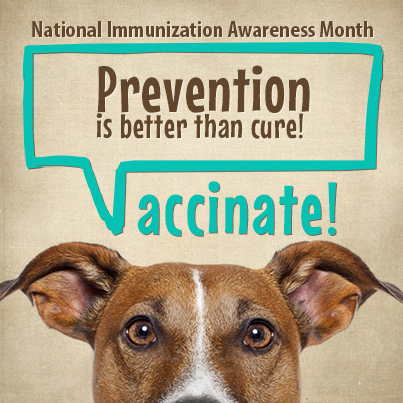 August is National Immunization Awareness Month. This observance offers the opportunity to remind the community of the importance of immunization to prevent disease. Each year thousands of pets succumb to diseases that could be preventable by vaccinations.
Giving your pet regular vaccinations is the secret to a healthy pet’s life. Vaccines now cover multiple diseases like DHLPP in dogs and FVCRP in cats. These diseases can cause illness in your pet so it is important to vaccinate to reduce the risk and protect the health of your pet. Other diseases that can be vaccinated against include Bordetella which is a upper respiratory disease in dogs and Lyme disease which affects the joints of your dog.
Not only is it important to vaccinate your pet against those diseases, it is of utmost importance to vaccinate your pet against rabies. Rabies is a disease that can be transmitted to humans. This disease is capable of paralyzing the nervous system in your pet and can be spread through saliva. Rabies is preventable by vaccinating against it. The rabies virus is a fast moving virus, so if your pet is not treated soon after the symptoms appear, the prognosis is very poor. So, if your pet has been bitten by, been in a fight, or in contact with a rabid animal, it is my recommendation that you take your pet to your veterinarian for preventative care immediately
There are many symptoms to watch for in your pets. These include seizures, paralysis, difficulty swallowing, lack of muscular coordination, aggression and excessive excitability. There are now 1 year and 3 year vaccinations that are more effective and convenient. Always make sure your pets’ rabies vaccine is up to date.
In addition to rabies is protecting your pet from fleas and ticks. With the recent warm weather and the advent of summer, it is important to be aware of the diseases that can be spread by the insect and arthropod vectors like the mosquito, tick and flea. These three parasites carry a lot of diseases that not only affect your pet but also can cause sickness in you.
The mosquito-borne diseases which are spread by a bite from a mosquito include Heartworm Disease, Encephalitis, West Nile, and Yellow Fever. Heartworm disease can be fatal to dogs if left untreated, but it is easier to prevent it than treat it. The other diseases can affect humans as well with clinical signs ranging from fever to headaches to even death.
Feel free to contact us at our office to make sure that your pet is up-to-date with its vaccinations. It can be a matter of life or death.